

The Pillars of Space: Propulsion and Energy
A central theme of Comet Surfer is the evolution of space technologies that may one day allow humanity to become a truly interplanetary civilization.
The chemical rockets we use today are highly effective for escaping Earth’s gravity, but they are not the most efficient solution for long-duration interplanetary travel. Modern aerospace research increasingly explores alternatives such as ion propulsion, electric propulsion, and advanced nuclear systems as the foundation for the next generation of space exploration. aerospacelab-journal.org+2The Aerospace Corporation+2
Throughout the saga, several propulsion concepts play a key role:
- Solar Sails: Solar sails harness the momentum carried by sunlight itself. By reflecting photons from the Sun, these enormous sails generate continuous thrust without consuming conventional fuel.
- Ion Engines: Ion propulsion systems use electromagnetic fields to accelerate charged particles to extremely high velocities, producing highly efficient thrust over long periods of time.
- AMIA Engines: The Artificial-Magnetic Ion Accelerator (AMIA) is an advanced propulsion concept developed specifically for the Comet Surfer universe.
AMIA engines combine large-scale ion acceleration, adaptive magnetic confinement, and environmental resource utilization, enabling spacecraft to achieve unprecedented performance across interplanetary distances.

Nuclear Power for Deep Space
Throughout the series, nuclear energy plays a central role, particularly thorium-based systems.
Thorium derives its name from Thor, the Norse god of thunder. Thorium is approximately three to four times more abundant in Earth’s crust than uranium and is found throughout many asteroids and planetary bodies. Although thorium itself is not directly fissile, it can absorb neutrons and transform into uranium-233, an excellent nuclear fuel.
Thorium offers several advantages:
- Greater natural abundance.
- Improved fuel utilization.
- Reduced production of long-lived transuranic waste.
- Enhanced resistance to certain proliferation pathways.
- Potentially longer fuel cycles.
However, thorium is not a perfect solution. It must first absorb neutrons and be converted into uranium-233, which can then sustain a nuclear chain reaction.
A thorium reactor requires an initial source of fissile material, typically enriched uranium or uranium-233, to begin operation. The fuel cycle is also more complex than traditional uranium-based systems and requires advanced fuel processing technologies.
For these reasons, most early nuclear power systems relied primarily on uranium. In contrast, the advanced civilizations of the twenty-second century possess the technological infrastructure necessary to take full advantage of thorium’s potential.
Compared with conventional nuclear fuels, thorium offers several advantages:
- High fuel availability
- Long operational life
- Reduced long-term radioactive waste
- No greenhouse gas emissions during operation
These characteristics make thorium particularly attractive for large-scale space infrastructure.
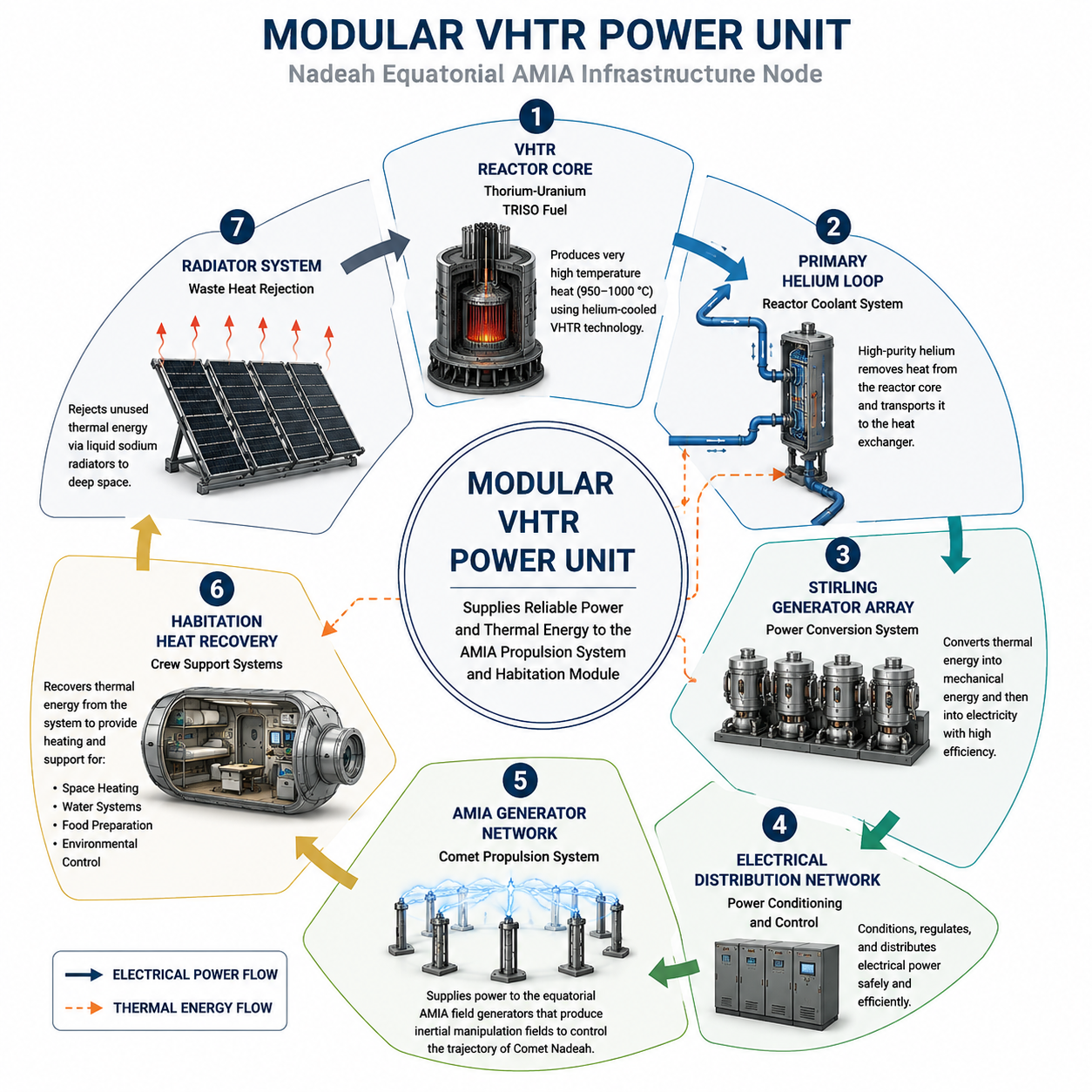
The VHTR Generator: Nuclear Power in Deep Space
One of the most important technologies in the Comet Surfer universe is the Very High Temperature Reactor (VHTR).
Designed specifically for extraterrestrial environments, the VHTR is a compact, efficient, and largely autonomous power-generation system capable of supporting long-duration missions far from Earth.
Its combination of high efficiency, thermal stability, and modular architecture makes it suitable for spacecraft, orbital stations, and planetary settlements.
The VHTR serves as the primary energy backbone for many of the advanced systems featured throughout the series.
Von Braun Wheels
Among the most elegant solutions ever proposed for human habitation in space is the Von Braun Wheel.
A rotating circular habitat generates artificial gravity through centrifugal acceleration, gently pushing occupants toward the outer rim and recreating many of the conditions humans experience on Earth.
This approach helps mitigate several harmful effects of prolonged exposure to microgravity, including:
- Bone density loss
- Muscle atrophy
- Cardiovascular deconditioning
Within the Comet Surfer universe, Von Braun Wheels form a critical component of orbital infrastructure.
The Tsiolkovsky Station, for example, utilizes this concept to provide a stable and sustainable living environment while operating near the Earth–Moon TL2 Lagrange Point.
Frontier Technologies
Two of the most transformative technologies in the saga are the Variable Gravity Generator (VGG) and the SPARC communication system (Spin-Polarized Augmented Reality Communication).
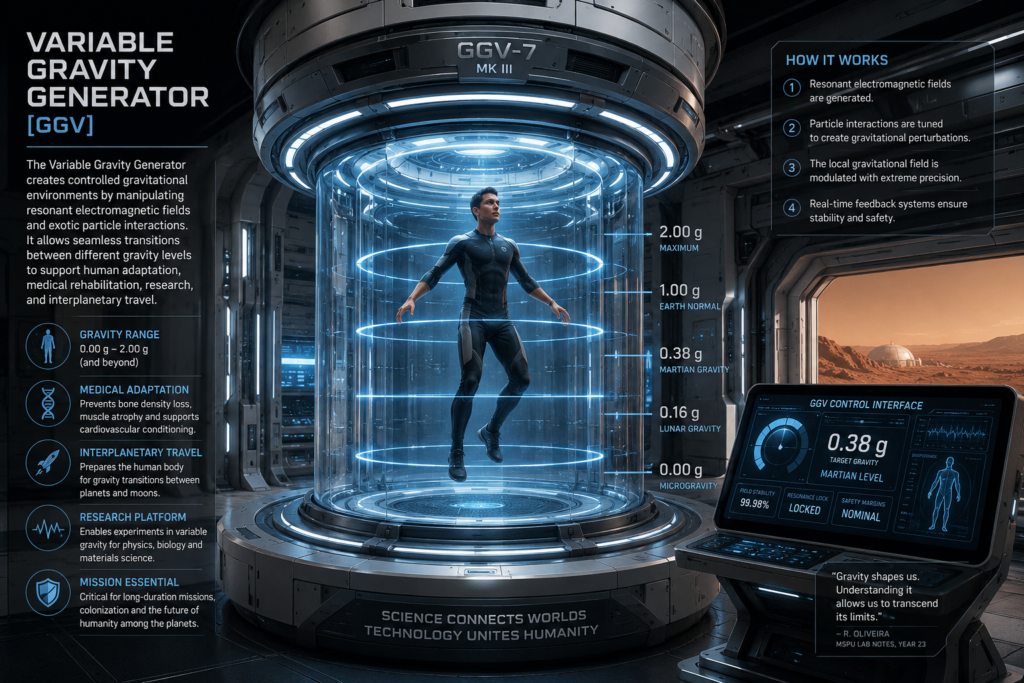
Variable Gravity Generators
The VGG concept originates from one of the great unanswered questions of modern physics: the graviton, the hypothetical quantum particle believed to mediate gravity.
Its discovery would represent a major step toward unifying quantum mechanics and general relativity.
In the novels, scientist Ricardo Oliveira discovers a method for generating and manipulating gravitons, leading to the development of Variable Gravity Generators.
These systems allow spacecraft and habitats to create customized gravitational environments, dramatically improving human health during extended spaceflight.
SPARC Communication
One of the greatest challenges of interplanetary civilization is communication.
Even light-speed signals require minutes—or even hours—to cross the Solar System.
The SPARC system addresses this limitation through advanced quantum-entanglement technologies.
Although quantum entanglement cannot currently be used for practical faster-than-light communication, the Comet Surfer universe assumes that future scientific breakthroughs have overcome this barrier.
The result is an instantaneous communication network that allows people separated by millions of kilometers to interact as naturally as if they occupied the same room.
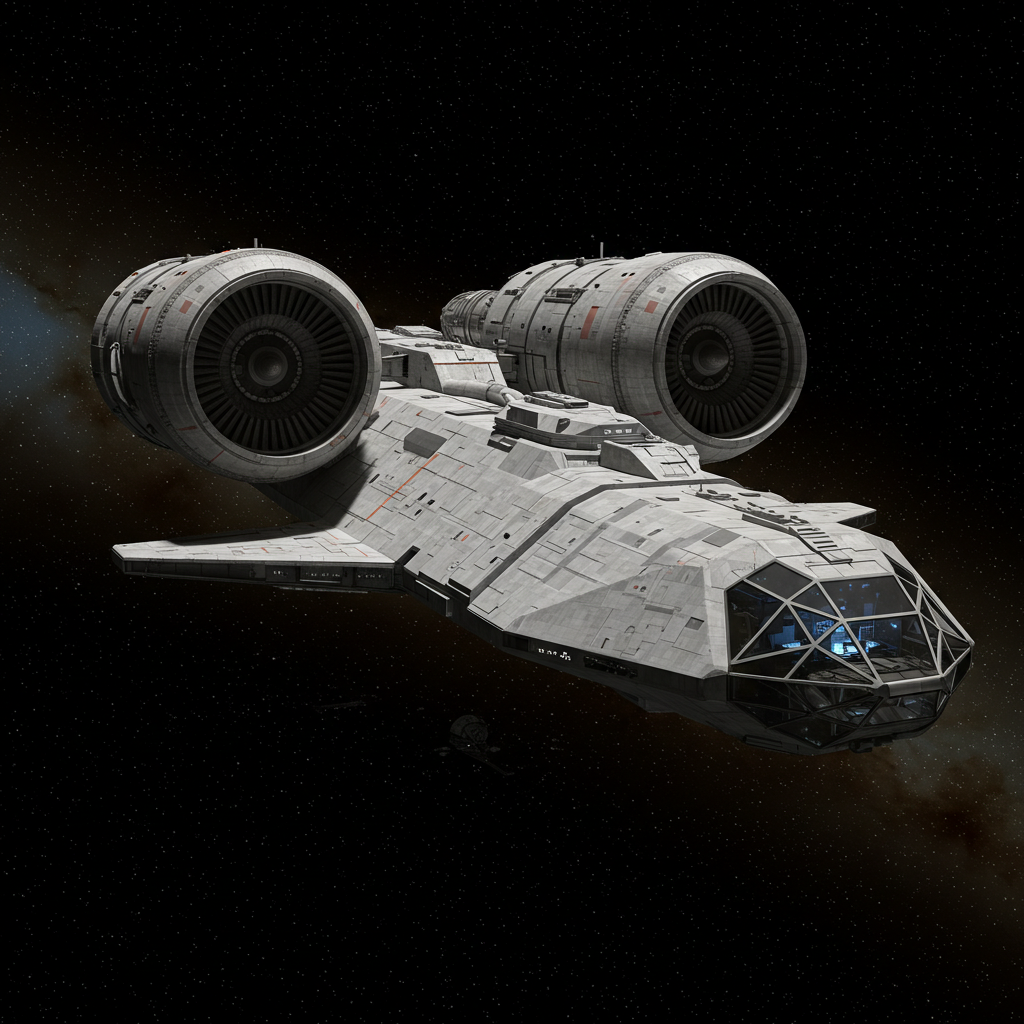
The Comet Surfer: Where the Technologies Converge
While each of these technologies can be studied independently, the true vision of the Comet Surfer universe emerges when they are combined into a single system.
The Comet Surfer is a deep-space exploration vessel designed to operate far beyond Mars, carrying a crew of scientists, engineers, and explorers across the Solar System. More than a spacecraft, it serves as a self-contained research station, manufacturing facility, habitat, and construction platform capable of supporting years of autonomous operation.
Many of the technologies described on this page play a role aboard the vessel or within the missions it supports. Advanced artificial intelligence assists the crew in navigation and decision-making. Additive manufacturing systems produce tools and replacement parts. Solar sails and AMIA technologies contribute to propulsion concepts, while nuclear power systems support large-scale infrastructure projects such as the Nadeah mission.
In many ways, the Comet Surfer is where the science becomes a story.
Explore the Comet Surfer Vessel
The Science Behind the Fiction
Many technologies featured in Comet Surfer are rooted in active areas of scientific research.
Today, researchers are already investigating:
- Ion and electric propulsion systems for deep-space missions ScienceDirect+1
- Nuclear thermal and nuclear electric propulsion Science News Today
- Artificial gravity concepts for long-duration spaceflight
- Additive manufacturing (3D printing) for space infrastructure The Washington Post
- Advanced robotics and autonomous systems
By building upon real scientific foundations, Comet Surfer seeks to create a plausible future rather than a purely imaginary one.