
In the Comet Surfer universe, humanity’s expansion throughout the Solar System is supported by a profound technological transformation on Earth itself.
While much of the saga focuses on spacecraft, Mars, and interplanetary exploration, the future described in these novels is also built upon innovations developed here on our home world.
From coral reef preservation systems to equatorial spaceports and sustainable transportation networks, these technologies demonstrate how Earth adapts to the challenges of the twenty-second century while remaining the cradle of human civilization.
REEF: Coral Cooling and Marine Preservation
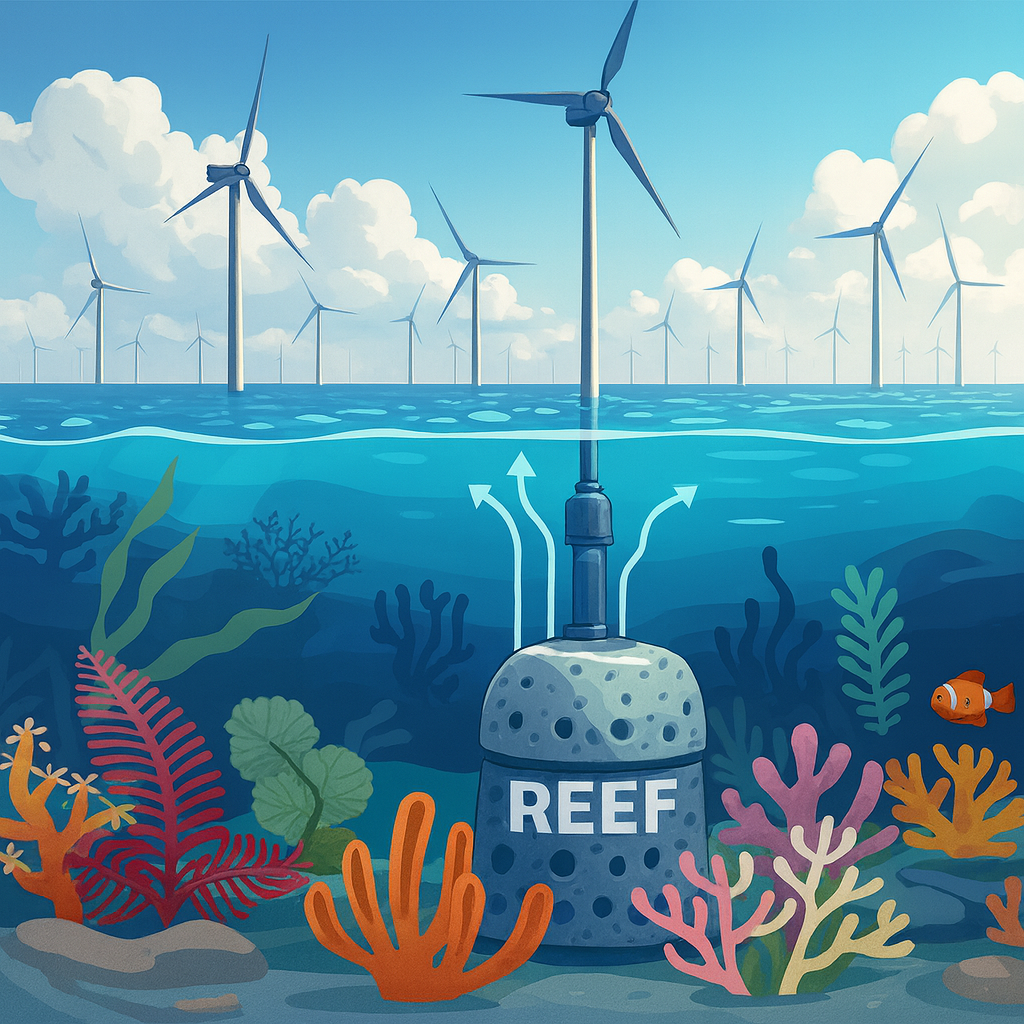
One of the most ambitious environmental initiatives in the Comet Surfer universe is the Renewable Energy Ecosystem for the Future (REEF).
Developed to protect the world’s most vulnerable coral systems, REEF combines renewable energy infrastructure with large-scale environmental engineering.
Massive seawater-concrete structures mimic the natural contours of coral reefs, providing stable surfaces upon which coral colonies can anchor and grow.
An extensive network of pipelines extends from offshore wind-energy platforms into the depths of the ocean, where colder water is continuously pumped toward the reef system.
This artificial cooling process helps prevent coral bleaching.
When ocean temperatures rise beyond critical thresholds, corals expel the symbiotic algae that provide much of their energy, often resulting in widespread reef collapse. By maintaining temperatures below these critical levels, REEF preserves coral health, sustains photosynthesis, and protects the biodiversity that depends upon these fragile ecosystems.
The project became a symbol of humanity’s transition from environmental exploitation toward planetary stewardship.
Equatorial Volcano Spaceports
As access to space became increasingly important, humanity sought more efficient and sustainable launch systems.
The novels describe a network of advanced launch facilities constructed on the slopes of major equatorial volcanoes, including:
- Chimborazo (Ecuador)
- Kilimanjaro (Tanzania)
- Kinabalu (Malaysia)
These locations were selected because of their:
- Proximity to the equator
- High elevation
- Geological stability
- Favorable launch trajectories
The Kinabalu Launch Complex represents one of the most remarkable engineering achievements of the era.
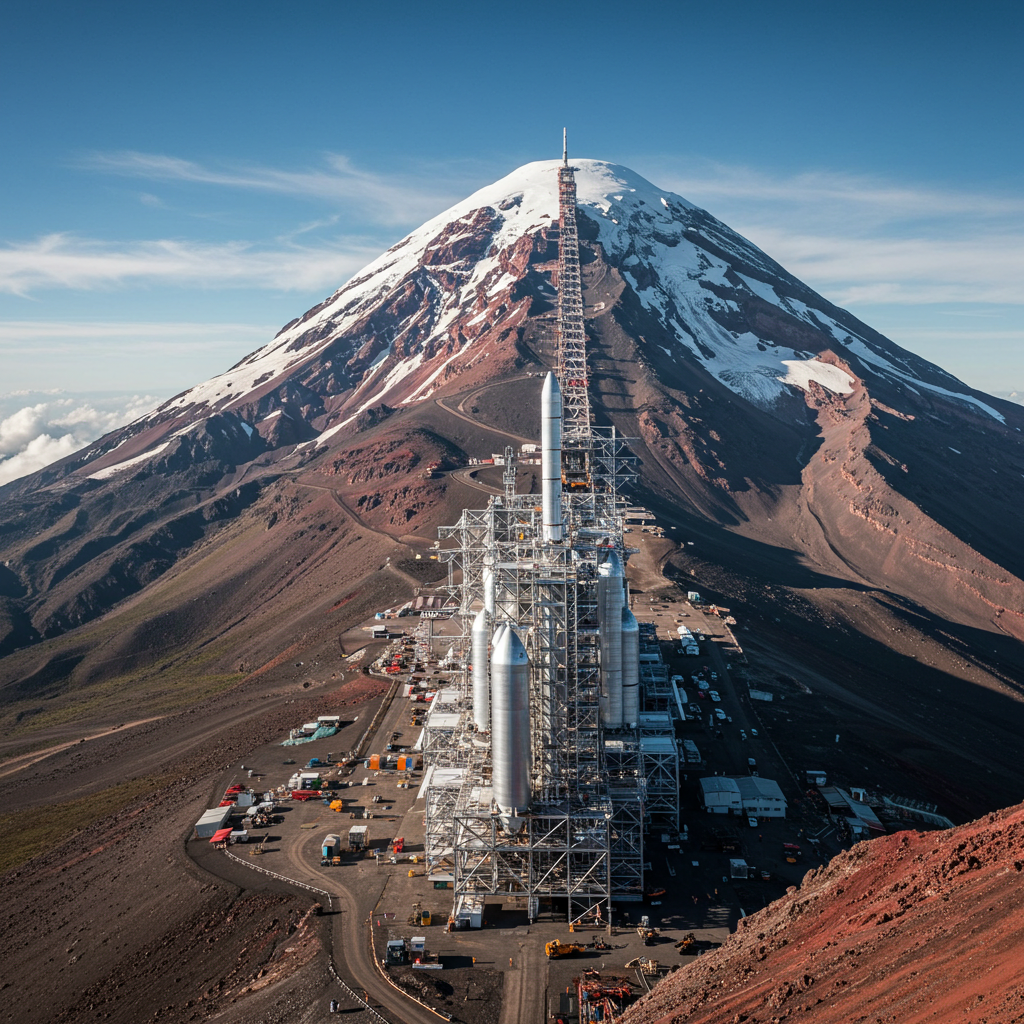
At approximately 1,500 meters above sea level, the mountain houses a colossal electromagnetic rail-launch system extending more than 3,200 meters through the volcanic structure.
Powered by approximately 180 megawatts of energy, the rail system accelerates launch vehicles to nearly 1,770 km/h (Mach 1.5) within a single minute.
Once released from the launch track, the spacecraft ignites a high-speed turbine propulsion system that builds upon the initial acceleration.
As the vehicle ascends beyond 61 kilometers and approaches hypersonic velocities near Mach 10, atmospheric density becomes too low for efficient SCRAM-jet operation.
At that point, the craft transitions to orbital or interplanetary propulsion systems.
By combining altitude, electromagnetic launch assistance, and advanced propulsion technologies, these facilities dramatically reduce the energy required to reach space.
Advanced Sustainable Transportation

Not all technological revolutions occur beyond Earth’s atmosphere.
Many innovations focus on reducing environmental impact while improving global connectivity.
Ground-Effect Sailcraft
Among the most distinctive vehicles of the era are advanced sailing craft that utilize the ground effect phenomenon.
Operating just above the surface of oceans, lakes, or ice fields, these vessels exploit the compressed layer of air between their wings and the surface below.
The result is extraordinary aerodynamic efficiency, enabling long-distance travel with minimal energy consumption.
These vehicles combine:
- Advanced sail technologies
- Solar-assisted power systems
- Autonomous navigation
- Lightweight composite materials
Several designs developed by Ethan Brown are inspired by these principles, blending elegance, sustainability, and engineering innovation.
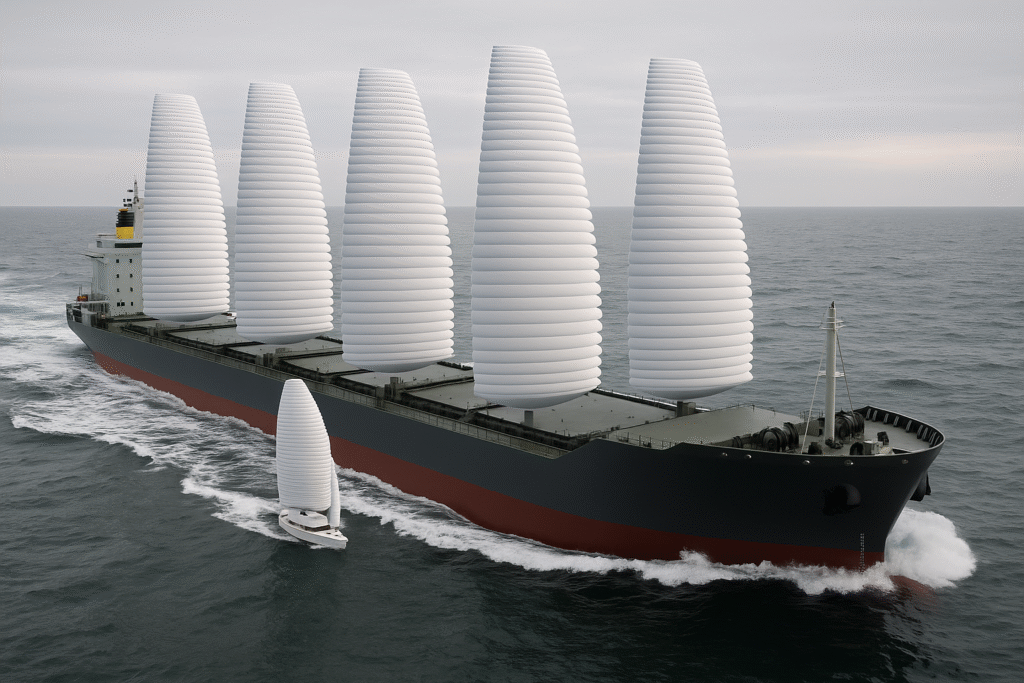
Intercontinental Wind-Powered Transport
Large-scale transportation systems increasingly integrate:
- Wind propulsion
- Solar energy
- Autonomous navigation
- Hybrid buoyancy systems
These networks reduce dependence on fossil fuels while maintaining reliable connections between remote regions of the planet.
The result is a transportation infrastructure that reflects the same design philosophy found throughout the Comet Surfer universe: efficiency through cooperation with natural forces rather than opposition to them.
Why These Technologies Matter
The technologies described throughout Comet Surfer are not intended merely as futuristic inventions.
They represent possible responses to real-world challenges:
- Climate change
- Biodiversity loss
- Sustainable transportation
- Access to space
- Long-term planetary stewardship
While the novels follow spacecraft, interplanetary missions, and distant colonies, they never lose sight of the world that made those achievements possible.
Earth remains humanity’s first home.
Its transformation is every bit as important as humanity’s expansion into the stars.
The Future Begins at Home
The future depicted in Comet Surfer is not built solely on rockets and distant worlds.
It begins with the decisions made on Earth—how we generate energy, protect ecosystems, move people and goods, and balance technological progress with environmental responsibility.
Before humanity learned to reshape planets, it first had to learn how to care for one.