
“Crikey!” is a classic exclamation used to express surprise, astonishment, or disbelief. Originating as 19th-century British slang, the expression became deeply embedded in Australian culture as a spontaneous reaction to excitement, danger, or wonder — from spotting a venomous snake to riding a massive ocean wave.
In the Comet Surfer Universe, Crickey is the colloquial term used to describe cricket-based protein products, especially cricket flour, textured cricket protein, sausages, strips, and other meat substitutes. The name first emerged humorously among Australian settlers and space crews, eventually becoming a common term across many orbital and Martian communities.
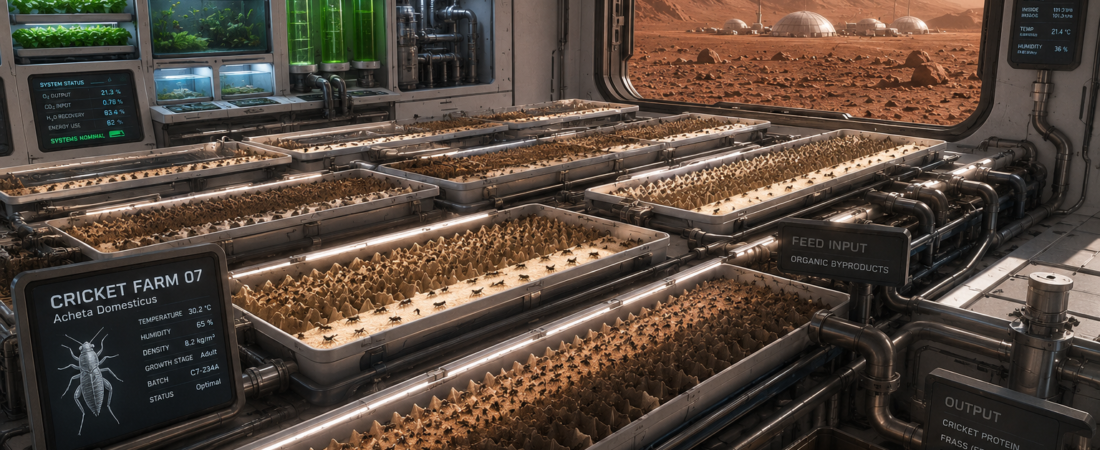
On Mars, where food systems must be efficient, sustainable, and compatible with closed-loop habitats, the main sources of protein include cricket, fish, shrimp, mushrooms, and frogs. Among these, Crickey became especially popular because of its adaptability. It can be milled into flour, extruded into strips, shaped into sausages, seasoned like bacon, or incorporated into traditional dishes from many cultures.
Nutritional Profile
Crickey typically contains 60–70% protein by weight and provides all nine essential amino acids.
Key Benefits
- High-quality complete protein.
- Rich in Vitamin B12, bioavailable iron, calcium, and Omega-3 and Omega-6 fatty acids.
- Contains chitin, a natural prebiotic fiber that may support digestive health and beneficial gut bacteria.
- Compact, shelf-stable, and highly efficient for controlled ecological systems.
For these reasons, Crickey became one of the foundational food technologies supporting long-duration missions, Martian settlements, and orbital habitats.
Taste and Culinary Use
Crickey has a mild, subtly nutty, earthy flavor that blends well into many foods. Its greatest advantage is versatility.
Common Uses
- Flour: Used in breads, pancakes, cookies, protein bars, and cachapas.
- Textured protein: Extruded into strips for stews, sautés, and goulash-style dishes.
- Sausages and bacon substitutes: Used in hearty frontier meals.
- Smoothies and shakes: Popular among athletes, explorers, and Trifoil racers.
- Space cuisine: Incorporated into compact, high-protein meals for orbital and planetary habitats.

Crickey in Martian Cuisine
As Mars developed its own food culture, Crickey became a bridge between sustainability and culinary memory. Rather than abandoning Earth traditions, settlers adapted familiar dishes using the protein sources available in Martian habitats.
Venezuelan Chalupa
Biyu had eaten arepas before, so she wanted something different. She discovered the Venezuelan chalupa, a fusion of lasagna and cachapa. The chalupa featured layers of tender Crickey nestled between sweet cachapas — savory pancakes made from freshly milled corn. Combined with creamy tofu cheese, the dish preserved the warmth and richness of Venezuelan cuisine while adapting it to Martian food systems.
Indian-Inspired Crickey Rogan Josh
Crickey also appeared in richly spiced dishes such as rogan josh. Tender Crickey was cooked in a savory spice blend and served alongside vegetable biryani studded with nuts and raisins. Fragrant white rice tempered the bold flavors, while ripe plantains added a sweet, refreshing balance to the meal.
Brazilian Feijoada
In Brazilian Martian cuisine, Crickey became a natural addition to feijoada, a rich black-bean stew. Future versions often included frog meat, Crickey sausages, rice, orange slices, roasted pineapple, and farofa seasoned with Crickey bacon. This adaptation preserved the communal spirit and deep flavor of Brazilian cooking while using proteins compatible with Martian ecology.
Polish Crulasz
At Aleksandra’s, Peter ordered Crulasz, his mother’s unique take on Polish goulash made with strips of extruded Crickey. The smoky aroma of seasoned Crickey blended with smoked paprika, allspice, onions, red peppers, mushrooms, tomato paste, and garlic. Slow-cooked and hearty, Crulasz became a comforting dish well suited for colder settlements and frontier kitchens.
Environmental Sustainability
Compared to traditional livestock, cricket farming offers enormous ecological advantages:
- Requires dramatically less water than beef production.
- Produces only a fraction of the greenhouse gas emissions associated with large livestock.
- Uses far less land and can be integrated into controlled habitat agriculture.
- Can be fed on organic agricultural byproducts.
- Converts feed into edible protein with high efficiency.
On Mars, this efficiency made Crickey one of the most practical and culturally adaptable protein sources available.
Considerations
Individuals with shellfish allergies may experience similar reactions to cricket protein due to shared proteins such as tropomyosin.
Curious to Try Crickey on Earth?
For readers interested in experiencing early Terran versions of Crickey, several companies already produce cricket-based protein products on Earth, including:
- Mighty Cricket offers organic, prebiotic-infused cricket protein powders.
- EXO Protein provides pure acheta (cricket) powder in various sizes.
- 3 Cricketeers sells sustainably sourced, urban-farmed pure cricket powder.
In the Comet Surfer Universe, Crickey is more than an alternative protein. It is a symbol of adaptation: proof that humanity can carry its cultures, flavors, and memories into new worlds while learning to live within new ecological limits.