Latest posts
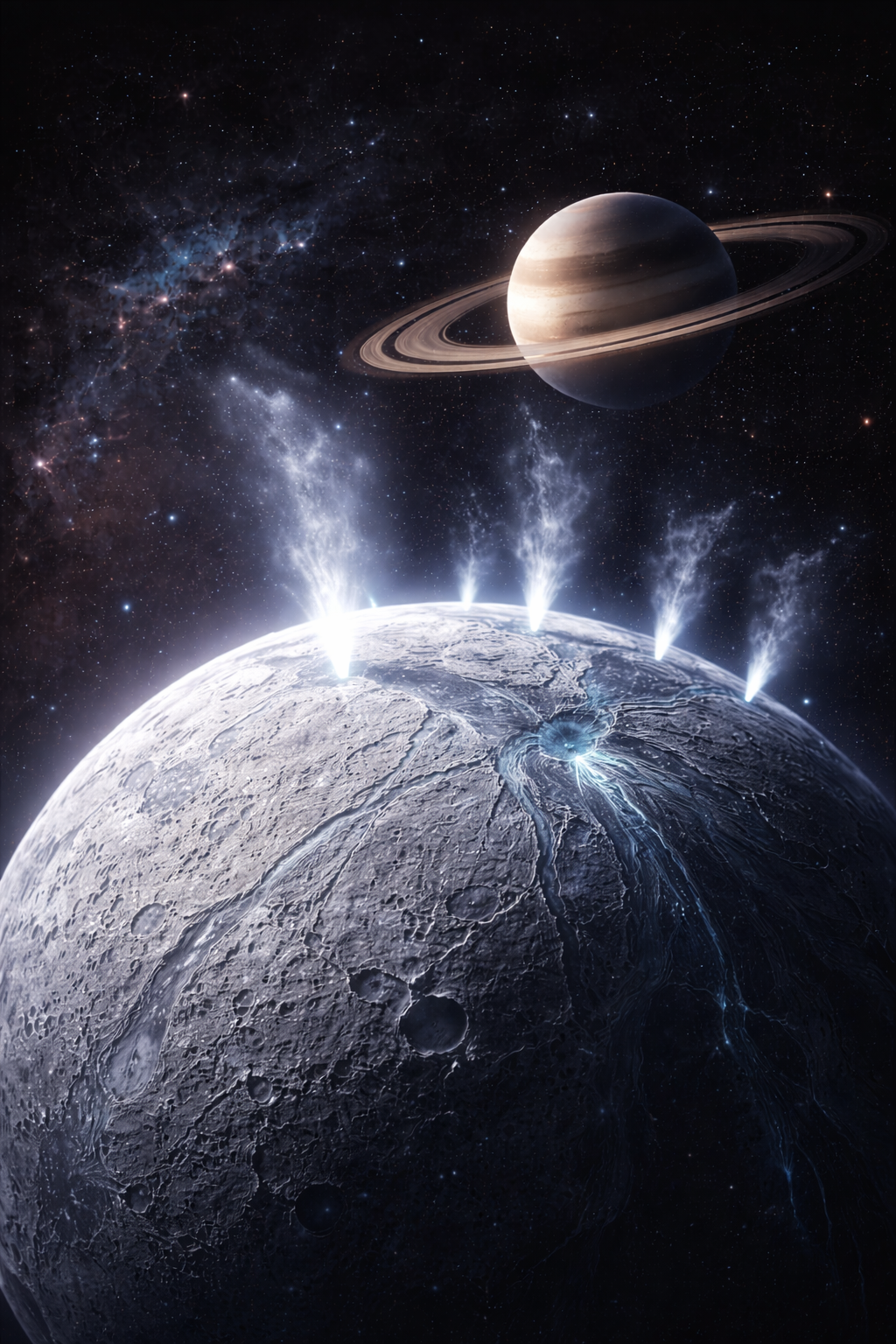
Enceladus — The Veiled Promise

1. Astronomical & Physical Profile Classification: Natural satellite of SaturnMean Radius: ~252 kmMass: ~1.08 × 10²⁰ kgSurface Gravity: ~0.113 m/s² (≈ 1.1% of Earth’s gravity) Enceladus is a small world by any conventional measure. Its significance does not arise from its size, but from its activity—persistent, energetic, and impossible to ignore. 2. Surface & Internal…
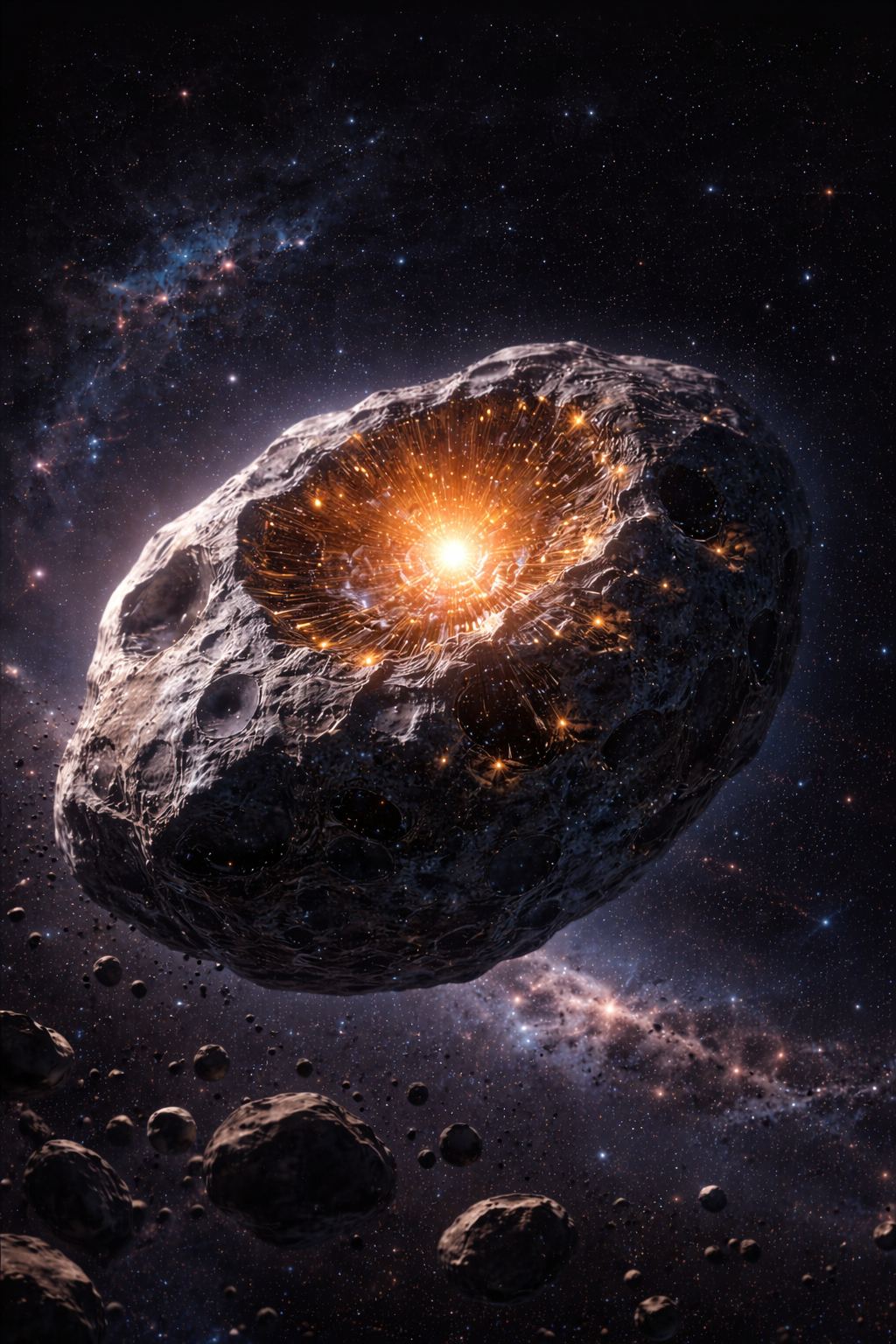
Psyche — The Exposed Core
1. Astronomical & Physical Profile Classification: Metallic asteroid (main asteroid belt)Designation: 16 PsycheMean Radius: ~113 kmMass: ~2.3 × 10¹⁹ kgSurface Gravity: ~0.06 m/s² (≈ 0.6% of Earth’s gravity) Psyche is believed to be the exposed metallic core of a failed protoplanet, stripped of its mantle during the violent early history of the Solar System. Where…
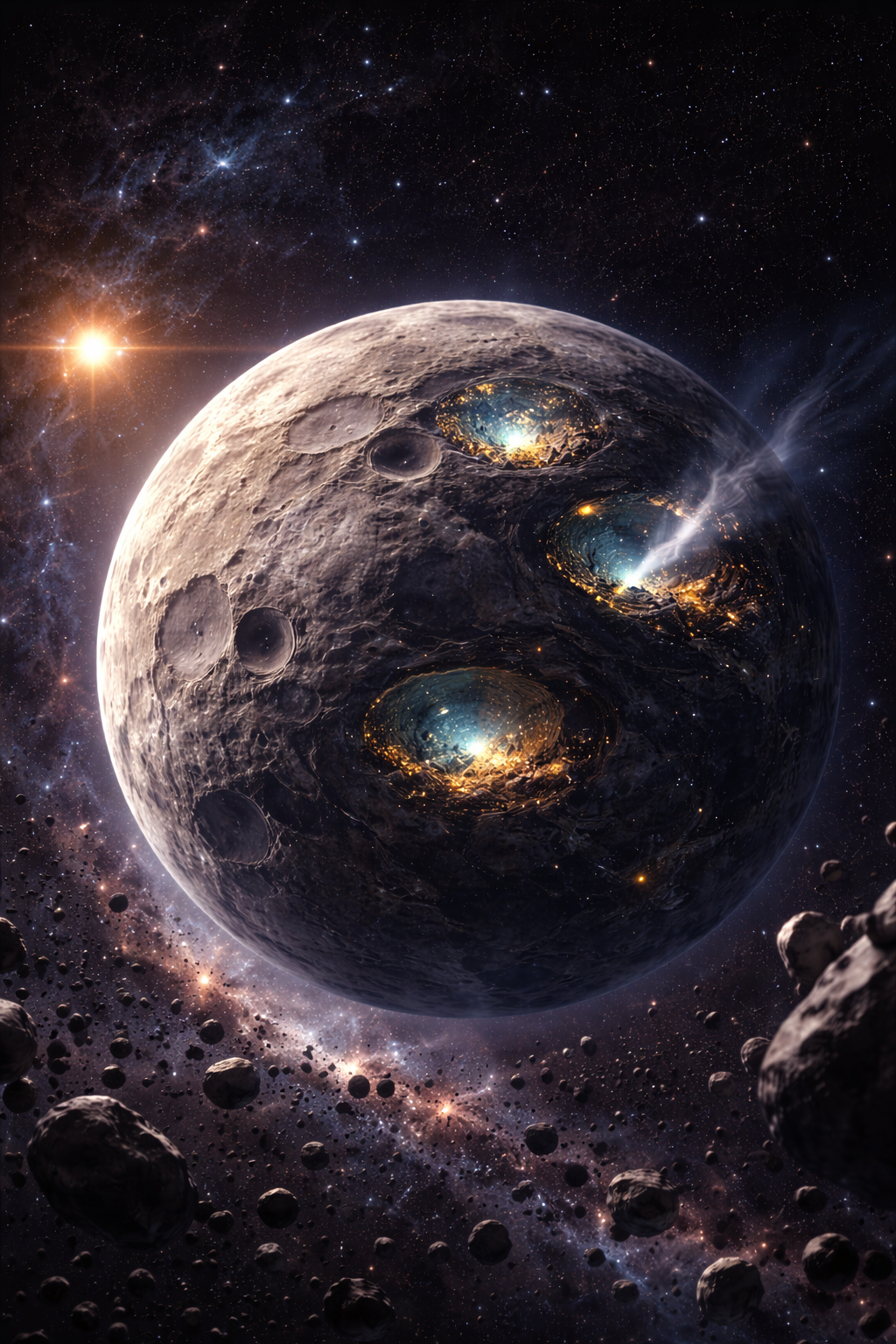
Ceres — The Capital of the Belt
1. Astronomical & Physical Profile Classification: Dwarf Planet (Main Asteroid Belt, between Mars and Jupiter) Mean Radius: ~473 km Mass: ~9.39 × 10²⁰ kg Surface Gravity: ~0.27 m/s² (≈ 2.8% of Earth’s gravity) Ceres is the largest body in the Asteroid Belt. Physically, it is modest. Civilizationally, it is indispensable. Its gravity is weak, yet…
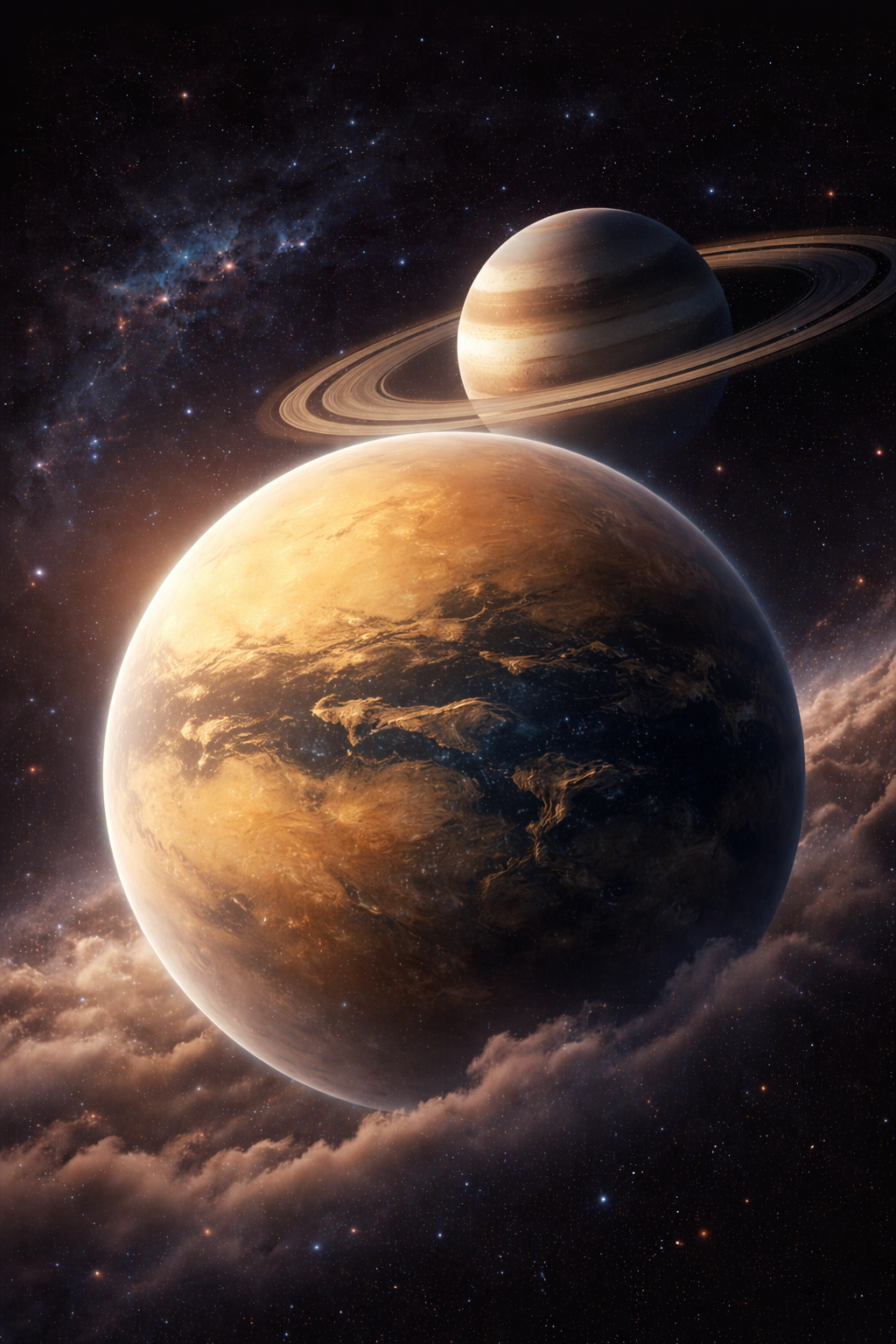
Titan — The Living Archive
1. Astronomical & Physical Profile Classification: Natural satellite of SaturnMean Radius: 2,575 kmMass: 1.345 × 10²³ kgSurface Gravity: 1.35 m/s² (≈ 14% of Earth’s gravity)Mean Density: 1.88 g/cm³Orbital Period: 15.95 Earth daysRotation: Tidally locked to Saturn Titan is the second-largest moon in the Solar System and the only known moon with a dense atmosphere. Its…
Nadeah — The Seduction
Astropedia Classification Entity Type: Pseudopersona Primary Designation: Comet Nadeah Cultural Designation: The Seduction Although Nadeah was physically a long-period comet, its influence on Martian civilization transcended its astronomical nature. Historians, philosophers, artists, and political leaders increasingly came to describe Nadeah as a pseudopersona—an entity without consciousness that nevertheless shaped human decisions, cultures, ambitions, and destinies…
Aleksandra’s

The second decisol begins with a different kind of light. In New Recife, once the sun has risen above the salmon-colored horizon and the city enters full academic activity, the planetarium district awakens with a quieter energy than the central entertainment sector. There, only a few doors away from the stellar dome where students and…
Luna — The Silent Threshold
1. Astronomical & Physical Profile Classification: Natural Satellite of Earth Mean Radius: 1,737.4 km Mass: 7.342 × 10²² kg Surface Gravity: 1.62 m/s² (≈ 16.5% of Earth’s gravity) Mean Density: 3.34 g/cm³ Orbital Period: 27.32 Earth days (sidereal) Synodic Period: 29.53 Earth days Rotation: Tidally locked to Earth The Moon’s synchronous rotation ensures that one…
Mars — The Second Cradle
1. Astronomical & Physical Profile Classification: Terrestrial Planet Mean Radius: 3,389.5 km Mass: 6.417 × 10²³ kg Surface Gravity: 3.71 m/s² (≈ 38% of Earth’s gravity) Mean Density: 3.93 g/cm³ Axial Tilt: 25.19° Rotation Period (Sidereal Day / Sol): 24 h 39 m 35 s Orbital Period (Sidereal Year): 687 Earth days (≈ 668.6 sols)…
Earth — The First Cradle
1. Astronomical & Physical Profile Classification: Terrestrial Planet Mean Radius: 6,371 km Mass: 5.972 × 10²⁴ kg Surface Gravity: 9.81 m/s² Mean Density: 5.51 g/cm³ Axial Tilt: 23.44° Rotation Period (Sidereal Day): 23 h 56 m 4 s Orbital Period (Sidereal Year): 365.25 days Earth’s stable rotation, moderate axial tilt, and protective magnetosphere created the…
Taghanzi: The Solar Evolution of the Chinese Language
As Chinese civilization expanded beyond Earth and into the orbital belts, lunar domes, and Martian colonies, the written form of the language underwent one of its most significant evolutions since the simplification reforms of the 20th century. What emerged was Taghanzi (Tag-汉字), a hybrid linguistic system designed to meet the needs of a highly mobile,…